Kerala's 3,000 Sq Ft House Tax: What Counts, What It Costs and How Far Back It Can Go
In Kerala, 3,000 square feet is more than a house size. It is a tax line. Any residential building completed on or after 1 April 1999 with a plinth area of 278.7 sq m or more pays an annual tax under Section 5A of the Kerala Building Tax Act, 1975, every year for as long as it stands.
For two decades this was called the luxury tax. Since the 2023 amendment to the Act, it is called additional tax. The threshold, the rates and the collecting authority, the Revenue Department through the Tahsildar, are unchanged.
Why the name changed
When GST came in, the 101st Constitutional Amendment removed the state's general power to tax luxuries. A levy labelled "luxury tax" was exposed, so the state cabinet cleared a rename on legal advice in July 2023 and the Assembly passed it that September.
In June 2025, a Division Bench of the Kerala High Court upheld Section 5A as a tax on buildings, which the state can levy under Entry 49 of the State List. The levy is valid.
What owners pay
The tax is fixed by slab, not by the value of the house.
- Below 278.70 sq m (under 3,000 sq ft): nil
- 278.70 to 464.50 sq m (3,000 to 5,000 sq ft): Rs 5,000 a year
- 464.50 to 696.75 sq m (5,000 to 7,500 sq ft): Rs 7,500 a year
- 696.75 to 929 sq m (7,500 to 10,000 sq ft): Rs 10,000 a year
- Above 929 sq m (over 10,000 sq ft): Rs 12,500 a year
The tax is payable in advance by 31 March each year. Paying five years together has been reported to earn a rebate of up to 20 per cent.
This is separate from the one-time building tax paid at completion and from the annual property tax collected by your panchayat or municipality.
The three-year limit on arrears
The same June 2025 judgment set an important limit. The owner in that case had received his first demand, covering every year from 2007-08 to 2020-21. The court held that a demand reaching back more than three years before the date of the notice cannot be sustained.
For houses that were never assessed, this caps how much a late notice can claim.
What counts towards 278.7 sq m
Most disputes are about a few square metres, so it matters what is measured. The Act has its own definition of plinth area, and the High Court has refused to borrow the 50 per cent discounts for verandahs and open spaces from the Building Rules.
Left out of the measurement:
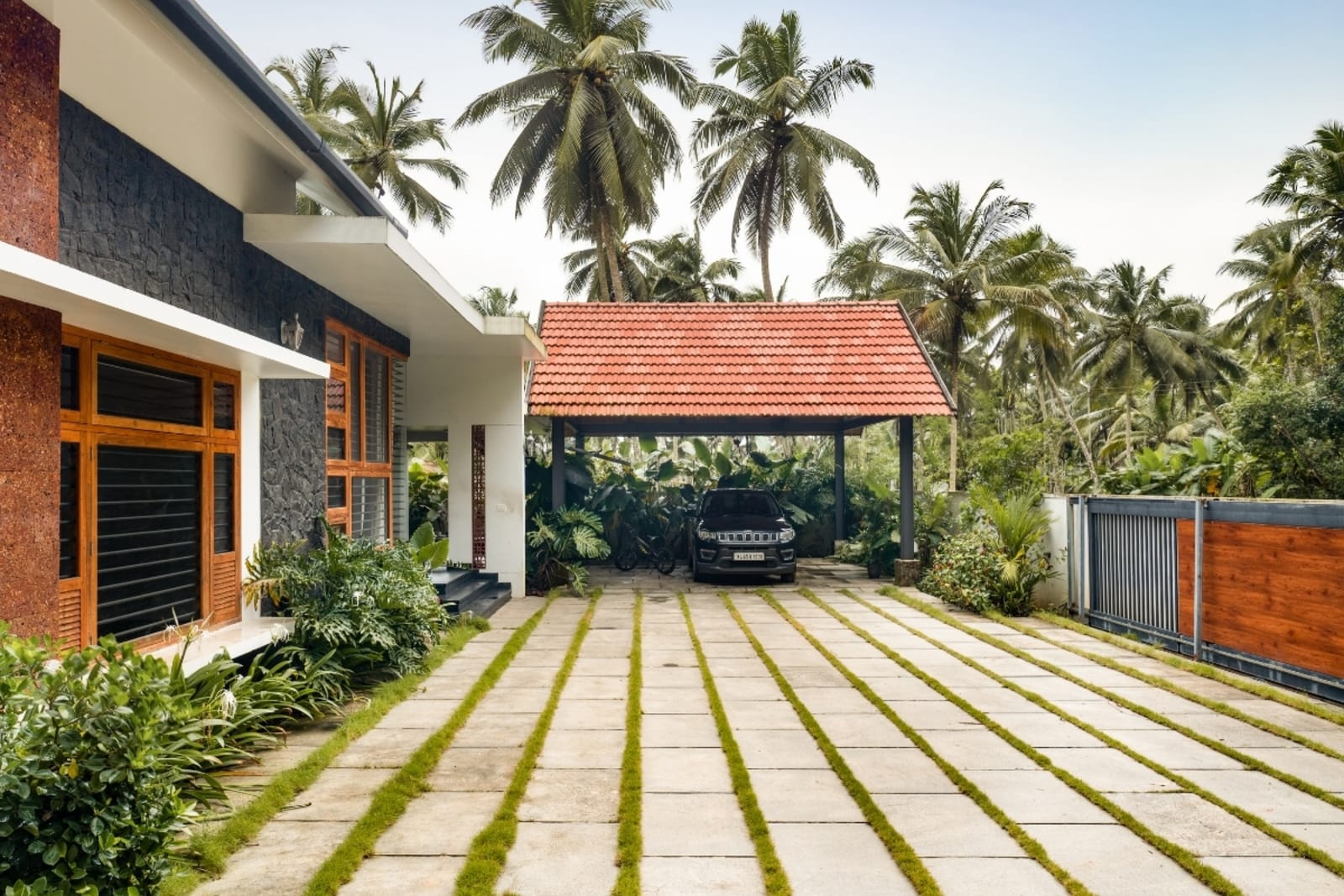
- Car porch or garage, under the proviso to Section 6
- Out-houses for firewood or storage appurtenant to the house
- Open terraces and courtyards without a roof
- A sheet or truss roof over the terrace that is open on its sides
Counted in full:
- Sit-outs and verandahs
- A truss-roofed terrace that is enclosed and used as a room
- A home office, clinic or studio inside the house. The High Court refused to exclude an advocate's study in May 2024
- Any portion let out for shops or offices
- Extensions added after 1999, which bring the whole house up for re-measurement
What the 2023 amendment changed
- Measurement starts from local body records. Plinth area is now taken from approved plans and LSG data. Even so, the High Court has held that an occupancy certificate is not final, and the Tahsildar may still re-measure.
- False declarations cost more. The old maximum fine of Rs 1,000 has been replaced by a penalty of half the tax due.
- The Collector has longer to revise. The window for the District Collector to revise an assessment grew from three months to one year.
Flats and family transfers
For apartments, the Supreme Court ruled in 2015 that a single owner of a building is assessed on the combined area of all flats. Once the flats are sold, each one is measured alone against the threshold.
Gifting part of a house to a relative does not end the liability. In October 2024 the High Court refused a refund to an owner who did this, calling it tax evasion, not tax planning.
What this means for you
The tax is small compared with the cost of a house this size. The expense comes from surprises: arrears, a re-measurement that finds more area, and penalties that now scale with the tax.
The best time to deal with it is at the design stage.
- Measure the way the Act does. Use the full built-up area, verandahs included.
- Design the car porch as a separate, open garage structure.
- Keep terrace roofs open on the sides, and don't enclose them later.
- Plan extensions knowing the whole house will be re-assessed.
If you are planning a home near 3,000 sq ft, or have received an additional tax demand, the URU team can review your drawings and measurements before you build or reply.
This article is general information, not legal advice. Owners facing a demand should consult a tax practitioner.