Define the opportunity.
Bring the brief, site, budget priorities and project constraints into the same conversation. Establish what the project needs to achieve before design decisions gather momentum.
Discuss your briefWe bring design and technical thinking together around your project. From understanding a site and shaping the brief to coordinating spaces, systems and delivery, each discipline contributes to a shared vision. The right scope starts with what you need to achieve.
One project. Connected decisions.
Bring the brief, site, budget priorities and project constraints into the same conversation. Establish what the project needs to achieve before design decisions gather momentum.
Discuss your briefConnect architecture, interiors, landscape and relevant engineering. Our strength in tropical, climate-responsive design brings orientation, shading and ventilation into decisions about heat, daylight and everyday comfort.
Explore our workFee-based integrated project management for turnkey projects, coordinating design, programme and delivery responsibilities within an agreed consultancy scope.
Meet the practiceOur India practice offers multidisciplinary design and consulting. Our Dubai practice focuses on architecture, interiors and landscape. Services, specialist appointments and delivery responsibilities are agreed for each project.
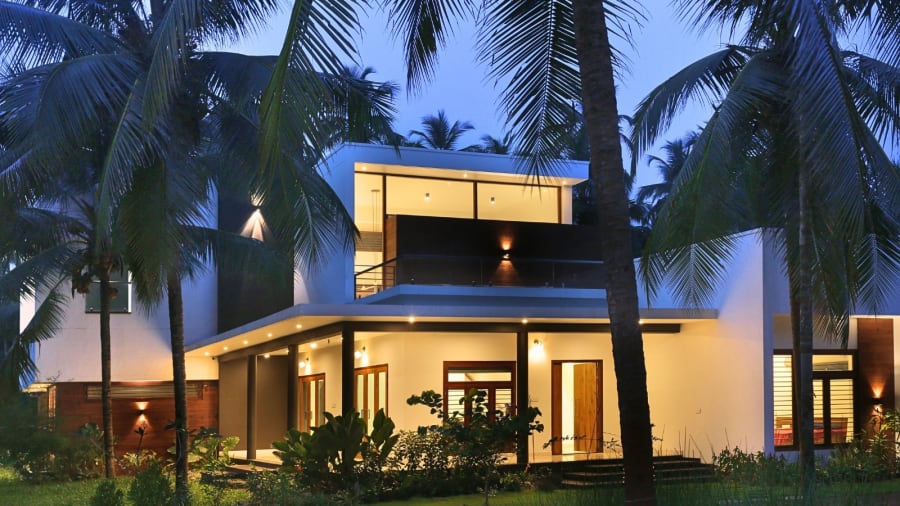 Architecture
Spatial design that resolves programme, place and purpose as a single act.
We practice architecture as a synthetic discipline: structure, environment and material resolved together, not assembled from separate consultants. Every project begins with a specific reading of its site, climate and culture. In Kerala, that means courtyard ventilation, deep overhangs and the thermal logic of laterite. In the Gulf, it means shading strategy, compressed footprints and material performance under extreme heat. The result in both cases is a building that is rooted in its place, not imported from a catalogue. The same rigour applies to adaptive reuse and refurbishment, where existing structures are assessed, retained and transformed rather than replaced.
Related projects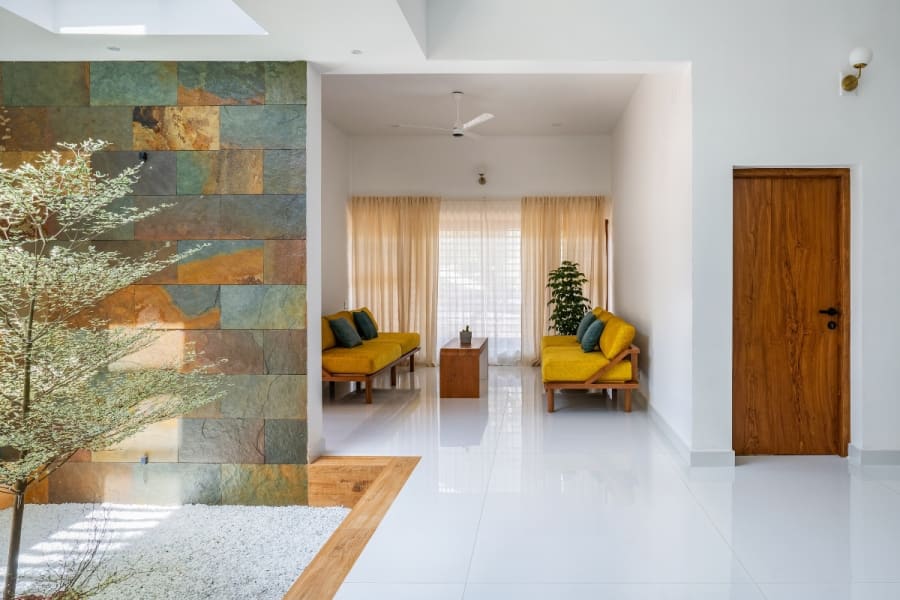 Interior Design
Environments shaped by material, light and human experience.
We do not separate interiors from architecture. They are resolved by the same team, from the earliest stage of design. The relationship between a ceiling height and the daylight it admits, between a material choice and the acoustic quality it produces, is decided before the structure is locked. Interior design at URU is not a fit-out service applied after the building is complete. It is an intrinsic part of the spatial proposition.
Related projects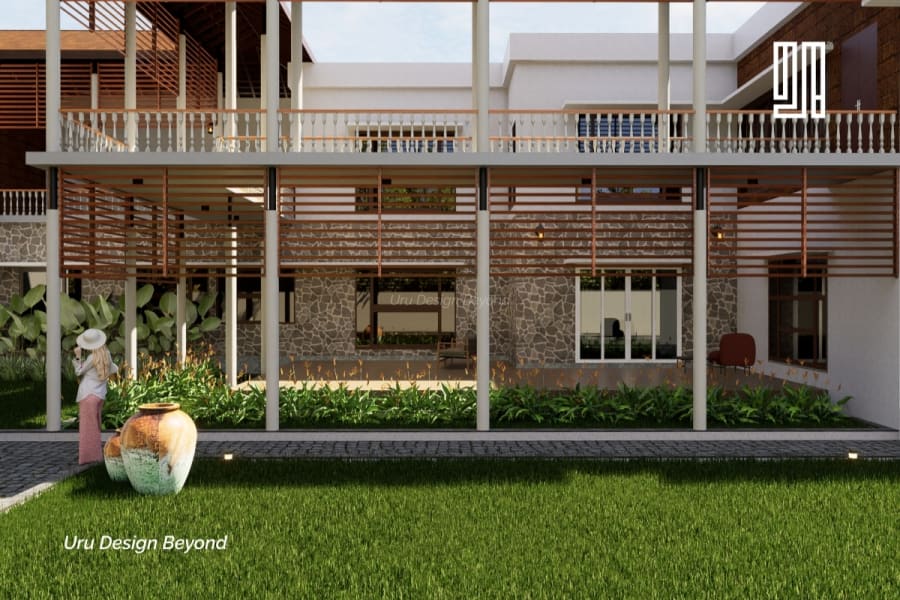 Landscape Design
Ground-level interventions that bind building to ecology.
In Kerala's climate, landscape is not decorative. It is thermal, hydrological and cultural infrastructure. A tree placed correctly on the western elevation reduces solar gain more effectively than any glazing specification. A drainage strategy that holds rainwater on site rather than discharging it restores the hydrological cycle rather than interrupting it. URU's landscape work integrates with architecture from concept stage, not as an afterthought but as part of the same environmental logic.
Related projects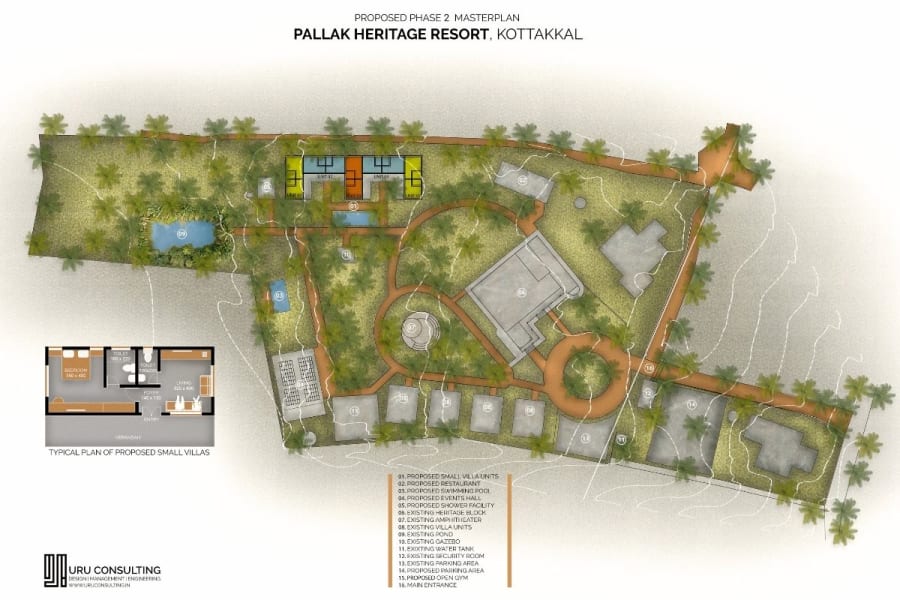 Master Planning
The ground rules of a project, set at the scale of the site.
Master planning sets the frame that every other discipline works within. Before a single building is designed, the questions are settled at the scale of the site and its surroundings: how movement enters and leaves, where density belongs, how water moves across the ground, which views and microclimates are worth protecting, and what sequence of construction keeps a large project financeable. URU approaches master planning as an engineering problem as much as a design one. Infrastructure capacity, drainage, solar orientation and phasing are resolved alongside the spatial vision, so the plan that results can be built and serviced rather than merely drawn. It is the connective discipline of the practice, where architecture, landscape, traffic and environmental engineering are reconciled into a single ground rule for the project.
Related projects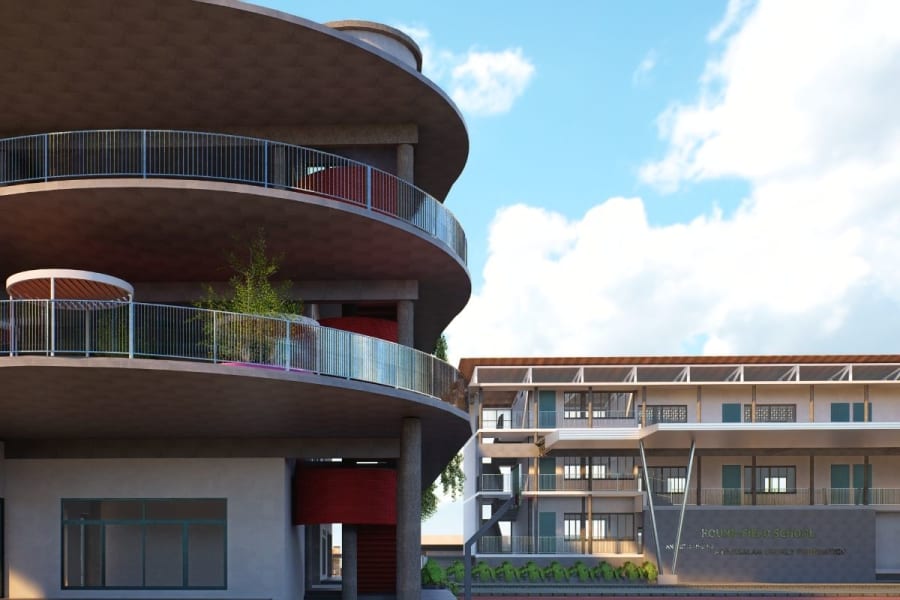 Structural Engineering
Load paths and structural logic engineered for longevity.
Our structural team works alongside architects from concept stage, not as a checking function brought in after design decisions are made, but as a co-author of the spatial proposition. The coordination failures that cost clients time and money typically occur at the interface between architect and engineer. URU eliminates that interface. Structure is resolved as a design act: the column grid is spatial, the slab depth is section, the cantilever is a statement of intent.
Related projects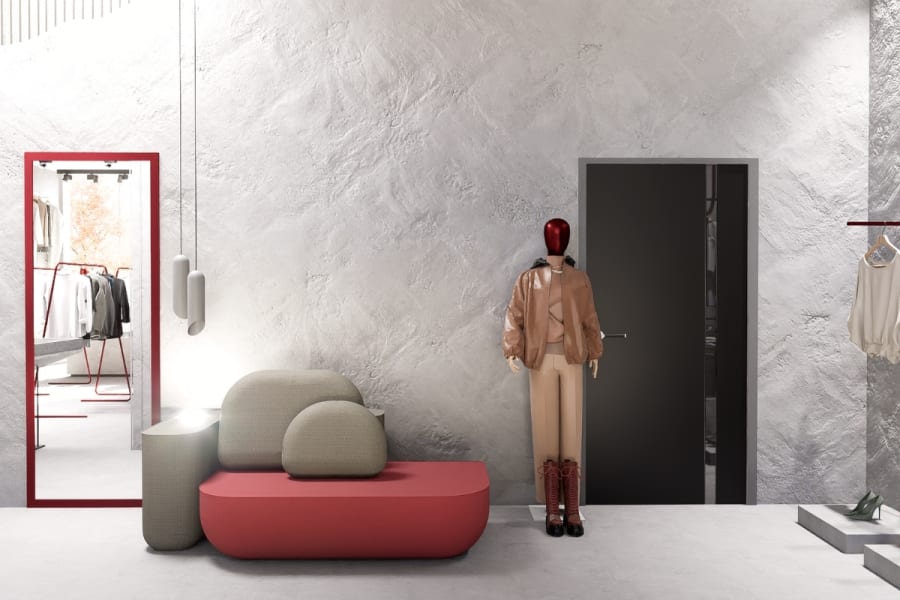 MEP Engineering
Mechanical, electrical and plumbing systems that perform silently.
The measure of good MEP engineering is invisibility. Systems that are properly coordinated with architecture disappear into the fabric of the building. They do not announce themselves through exposed conduits, dropped ceilings that compress space, or plant rooms that consume usable floor area. URU's MEP team designs systems to be maintainable over the life of the building, not merely code-compliant at the moment of handover. That distinction matters when the building is fifty years old.
Related projects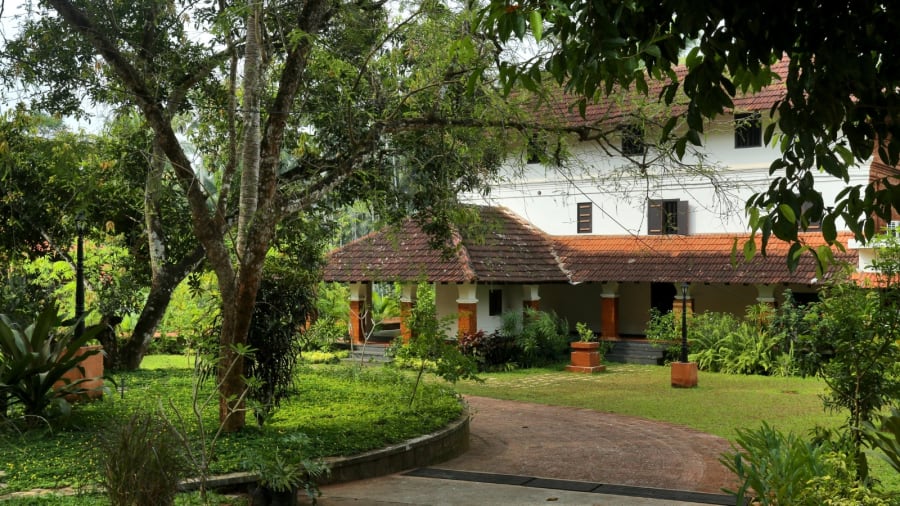 Project Management
Fee-based integrated project management for turnkey projects, coordinating design, programme and delivery responsibilities within an agreed consultancy scope.
URU provides fee-based integrated project management for turnkey projects. The consultancy brings design coordination, programme review and communication between the client, designers and appointed contractors into a connected process. The appointment defines the scope of site review, reporting and delivery support, together with the responsibilities of each specialist and contractor. Our role is to help carry design intent into construction and make decisions, dependencies and changes visible to the client. Discuss the project stage, delivery arrangement and required management scope with our team.
Related projects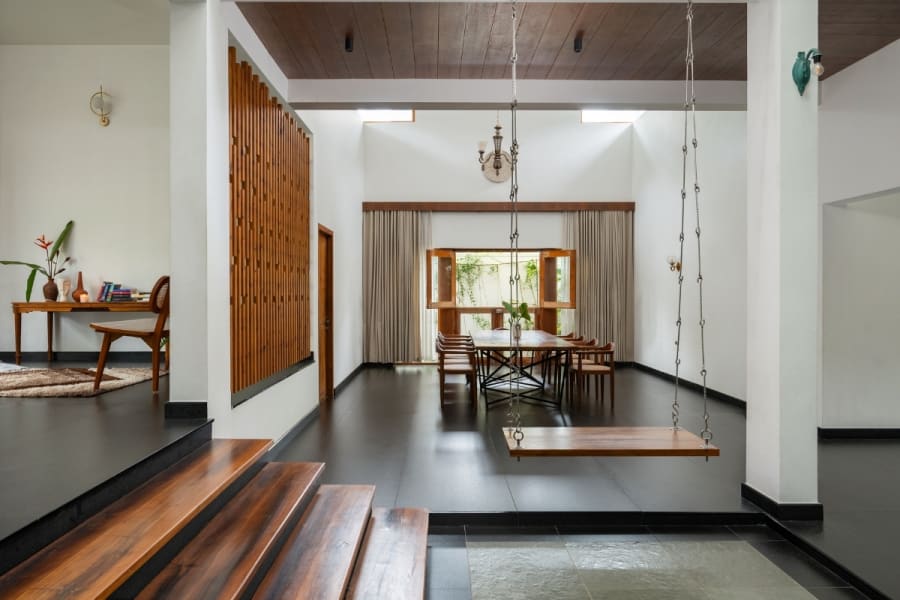 Sustainability
Environmental performance integrated from concept to operation.
Sustainability at URU is not a service line added to a completed design. It is the evaluative lens through which every design decision is made from the first sketch. Passive cooling strategy is resolved before air-conditioning systems are specified. Material embodied carbon is considered before structural systems are fixed. The result is environmental performance that is genuinely achieved, not calculated into compliance after the fact. For clients seeking formal certification or regulatory approval, we provide the analysis and documentation. For clients who simply want a building that works, we provide the same rigour, without the badge.
Our sustainability commitment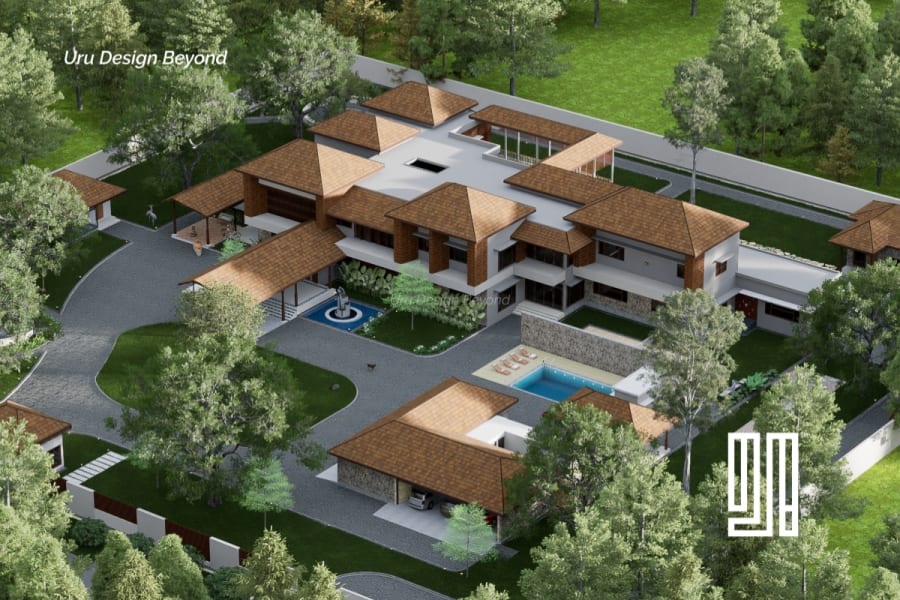 Traffic & Transportation
Movement planning at building, district and city scale.
URU added traffic and transportation planning to its offer in direct response to client need across mixed-use and masterplan work. As projects grow in complexity and urban density increases, movement cannot be resolved as an afterthought. It must be integrated into the spatial logic from the outset. Access strategies, parking provisions, pedestrian flow and public transport connections are resolved as part of the design, not presented to a highway authority as a compliance submission after the building form is fixed.
Related projects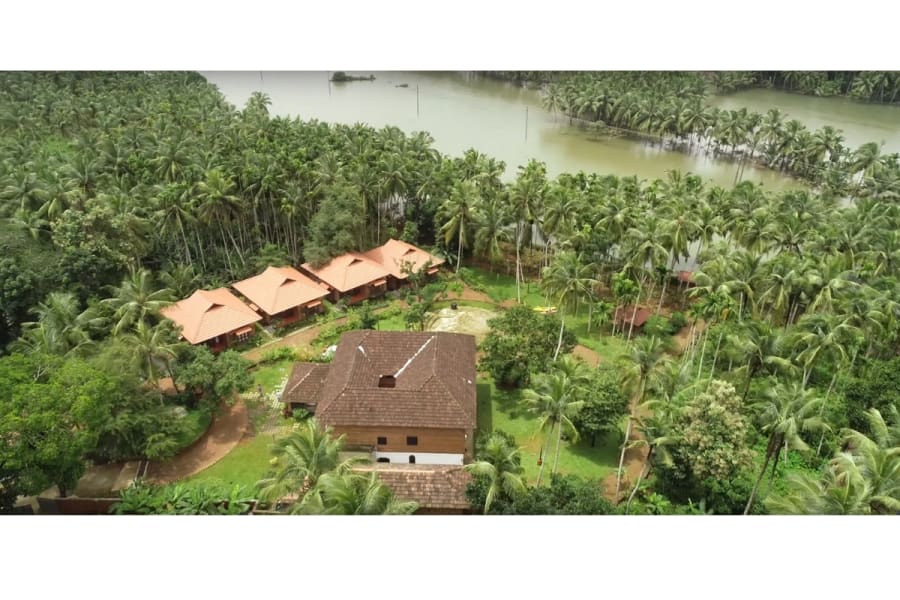 Environmental Engineering
Site assessment, impact analysis and ecological stewardship.
Projects that must navigate complex regulatory and ecological conditions require environmental engineering that is technically rigorous and strategically intelligent. URU provides site assessment, environmental impact analysis and ecological stewardship for clients whose projects intersect with sensitive landscapes, watercourses, protected habitats or regulatory approval processes. In Kerala's Western Ghats proximity, in the UAE's coastal and desert ecology, and across the range of conditions that characterise South Asian and Gulf development, the environmental dimension of a project is never peripheral.
Related projectsURU's integrated model is sector-agnostic. The disciplines travel. What changes is the brief, the regulatory context, and the specific demands of the building type. URU organises its sectoral practice through the 7R Framework — seven domain areas that structure how the practice builds expertise and tracks its portfolio.
Private homes, apartments and housing developments across Kerala and the Gulf, from single family residences to large-scale housing typologies.
Resorts, hotels and experiential stays designed with the specificity of place: landscape, material and local culture as the primary design drivers.
Office buildings, mixed commercial developments and retail environments, with the full integration of structure, MEP and project delivery.
Educational, healthcare, cultural and civic buildings that serve communities over long time horizons, where durability and spatial quality are the same obligation.
Purpose-built restaurant buildings and hospitality dining environments. Kitchen planning, ventilation engineering and acoustic design resolved as a single technical brief.
Clubs, sports facilities, community spaces and leisure buildings designed around the rhythms of active use, long-span structure and variable peak occupation.
Integrated Total Design brings the architectural brief and technical decisions into a coordinated process. URU connects design disciplines and fee-based project management around the needs of each project, with consultancy scope, specialist appointments and delivery responsibilities agreed at the outset.
That is not a service model. It is a conviction about how buildings should be made.