Why Laterite Remains One of Kerala's Smartest Building Materials
Walk through any village in Kerala and laterite is everywhere. You will find it in old compound walls, traditional homes, schools, temples, churches, and public buildings that have withstood decades of heavy monsoons and intense tropical heat.
While many view laterite as a nostalgic symbol of Kerala's architectural heritage, its real value lies in performance. It survived for generations not because of tradition, but because it was an intelligent and climate-appropriate choice.
Today, with rising temperatures, increasing material costs, and growing environmental awareness, laterite along with other compatible local and engineered options continues to offer valuable lessons for contemporary construction in Kerala.
Understanding Laterite
Laterite is a naturally occurring, iron and aluminium rich sedimentary material found abundantly across Kerala's tropical regions. When freshly quarried, it is soft and easily cut into blocks. Upon exposure to air, it hardens significantly, becoming a strong and durable masonry unit.
Its local availability kept transportation costs low, supported local skills and economies, and allowed construction techniques to evolve around its natural properties.
Climate-Responsive Material Choices
Kerala's challenging climate demands materials that perform well, not just look good. High humidity, heavy rainfall, intense solar radiation, and year-round warmth create tough conditions.
Laterite excels in this environment because it evolved locally:
-Excellent thermal mass that helps stabilize indoor temperatures -Porous structure that allows walls to breathe naturally -Good compatibility with local construction practices
These qualities support better passive cooling and reduce the need for mechanical air-conditioning.
Modern Alternatives Used in Contemporary Projects
While laterite remains highly relevant, several strong alternatives and hybrids are successfully used in current projects.
Wire-cut Bricks
These provide consistent size, sharp edges, and higher compressive strength. They deliver a clean, modern look while maintaining good thermal properties. Wire-cut bricks work well for both load-bearing and non-load-bearing walls and combine effectively with laterite.
Wienerberger Porotherm Blocks (and similar engineered clay blocks)
These lightweight, perforated clay blocks offer superior thermal insulation, faster construction, and reduced structural load. Their excellent insulation performance makes them ideal for Kerala's climate, helping keep interiors cooler and lowering energy use.
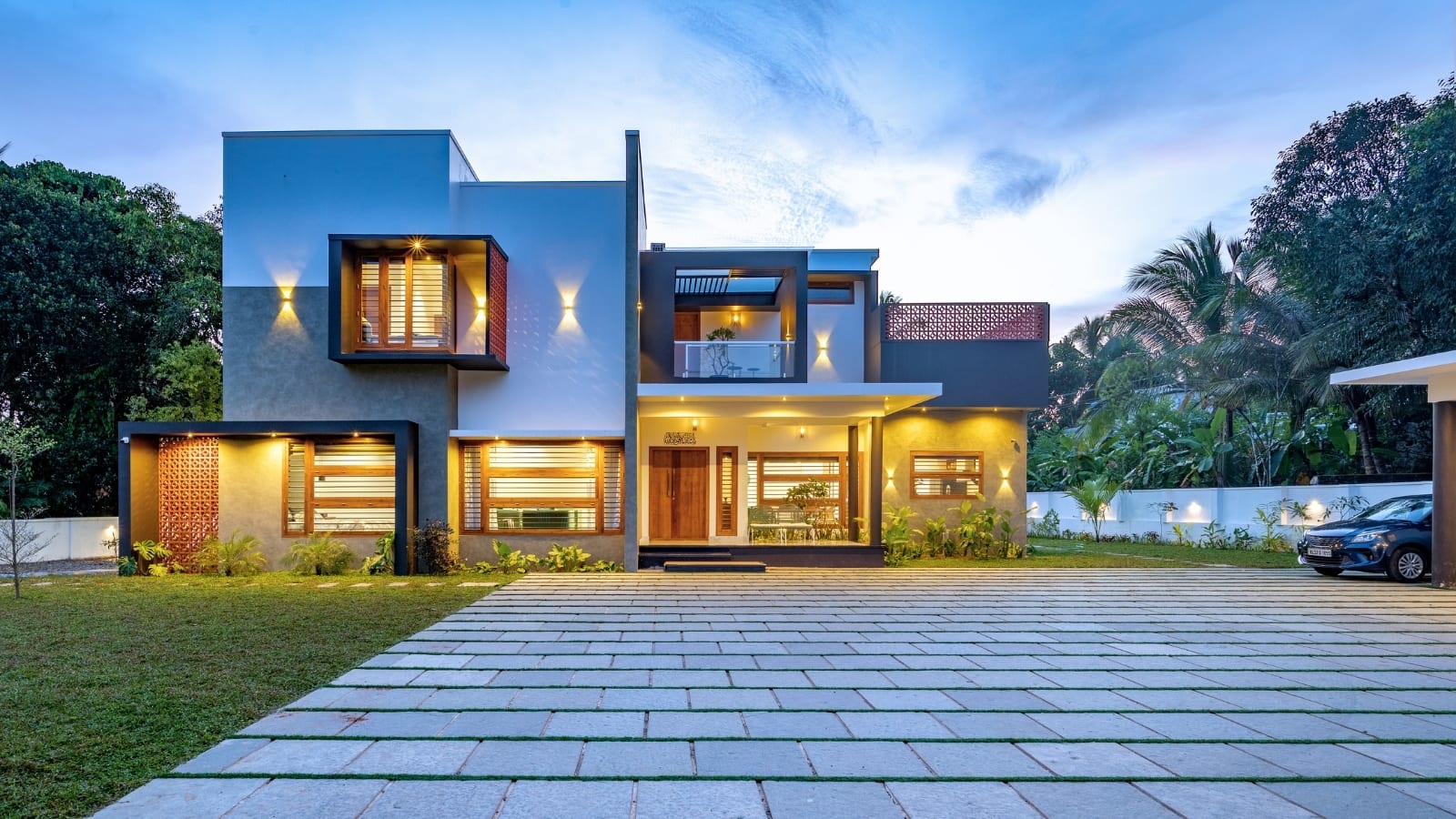
Many of our recent projects combine these materials strategically. Laterite is used for its aesthetic character and thermal mass in key areas, wire-cut bricks for precision and strength, and Wienerberger blocks where superior insulation and construction speed are priorities.
Structural Approach for Modern Needs
For contemporary homes featuring large open spaces, long spans, wide windows, and spacious rooms, a framed structure (RCC or steel) is highly recommended. In this system:
-The frame carries the main structural load -Walls function as non-load-bearing infill panels
This hybrid approach provides greater design freedom while allowing the full use of laterite, wire-cut bricks, or Wienerberger blocks for their thermal, environmental, and aesthetic benefits.
Sustainability Advantages
Locally sourced or regionally manufactured materials like laterite, wire-cut bricks, and Wienerberger blocks significantly reduce embodied carbon through shorter supply chains. They support the local economy and represent genuine sustainability focused on practical, context-sensitive building.
Material Intelligence Over Fashion
Trends come and go, but performance endures. The best buildings in Kerala are those where materials are chosen for thermal comfort, durability in monsoon conditions, low maintenance, environmental responsibility, and long-term value.
When laterite, wire-cut bricks, or engineered blocks are thoughtfully integrated with proper orientation, shading, ventilation, and a framed structure where needed, the result is architecture that feels naturally comfortable and ages gracefully.
Looking Ahead
The future of Kerala architecture lies in intelligently blending regional material wisdom with modern engineering, rather than copying the past or importing solutions from other climates.
Laterite, wire-cut bricks, and Wienerberger-type blocks each bring unique strengths. Using them appropriately, often combined with framed structures for larger spans and open plans, represents the smartest path forward: rooted in place, responsive to climate, and practical for contemporary living.
Good architecture in Kerala has always been, and will continue to be, about understanding context first.
Keywords: laterite, wire cut bricks, wienerberger porotherm, kerala architecture, sustainable building materials kerala, climate responsive design, thermal mass, framed structure kerala, eco friendly construction, laterite walls