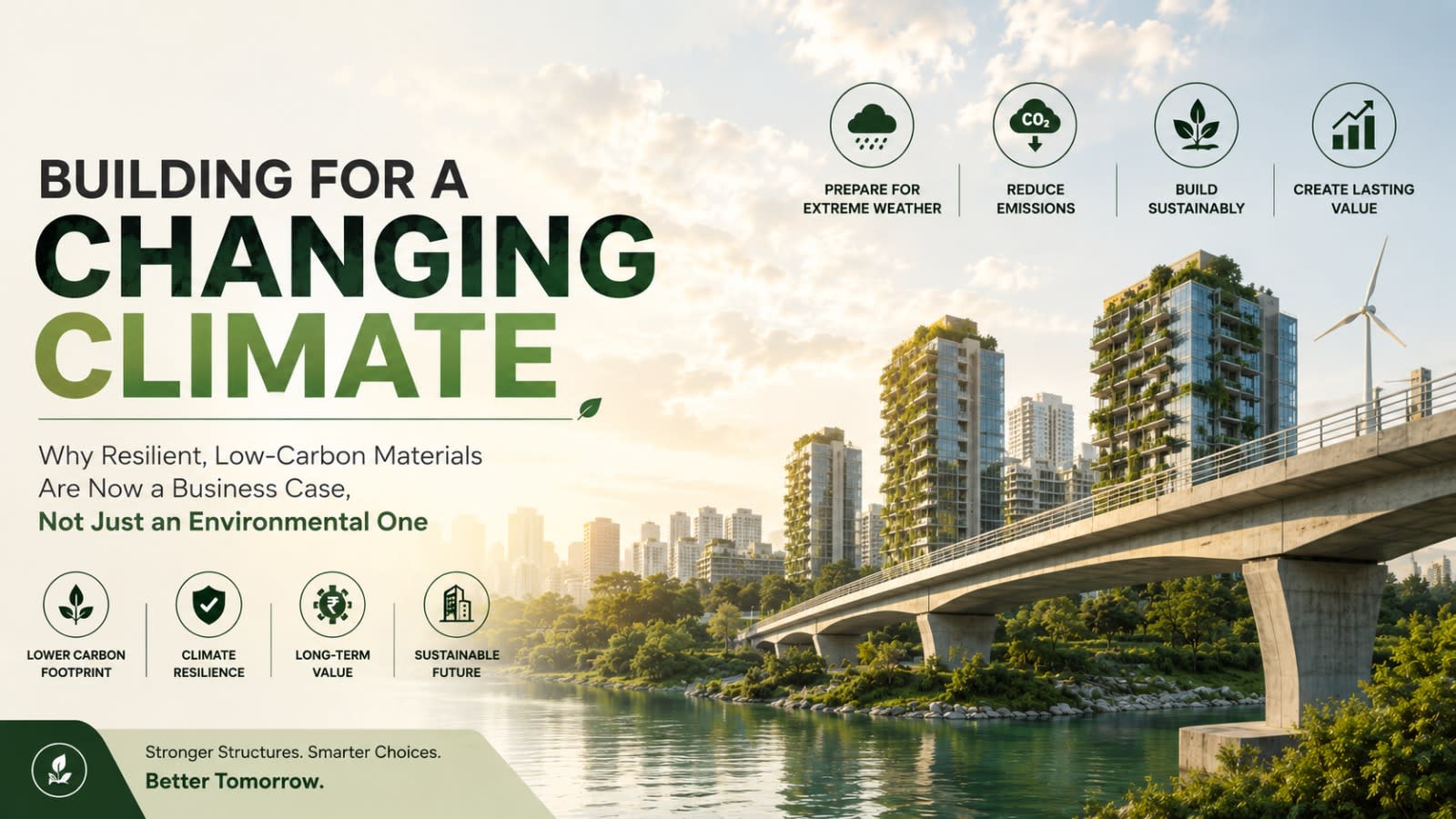
Building for a Changing Climate: Why Sustainable Construction Materials Matter More Than Ever
Building for a Changing Climate: Why Sustainable Construction Materials Matter More Than Ever
Climate change is reshaping the construction industry. Buildings, bridges, roads, and other infrastructure are now expected to perform under higher temperatures, heavier rainfall, flooding, and more frequent extreme weather events. At the same time, the industry is working to reduce the environmental impact of construction materials.
Concrete remains the most widely used construction material worldwide. However, cement production, the primary ingredient in conventional concrete, contributes approximately 8% of global carbon dioxide (CO₂) emissions. Since buildings and infrastructure often remain in service for 50 years or more, the materials selected during construction influence both long-term environmental impact and structural performance.
Why Sustainable Construction Materials Matter
Sustainable construction materials are no longer chosen only to reduce emissions. They also help improve durability, lower maintenance requirements, reduce lifecycle costs, and increase resilience against changing climate conditions.
Developers, engineers, governments, and investors increasingly consider climate resilience an essential part of project planning. Infrastructure that withstands heat, moisture, flooding, and environmental exposure generally requires fewer repairs and performs more reliably throughout its service life.
Low-Carbon Alternatives to Conventional Concrete
Several technologies are helping reduce the carbon footprint of concrete without compromising structural performance.
Portland-Limestone Cement (PLC)
PLC replaces a portion of traditional clinker with limestone, reducing embodied carbon while maintaining construction practices familiar to contractors and engineers.
Geopolymer Concrete
Geopolymer concrete uses industrial by-products such as fly ash and other supplementary cementitious materials to reduce dependence on ordinary Portland cement, significantly lowering carbon emissions in suitable applications.
Carbon Mineralization
Carbon mineralization captures carbon dioxide during concrete production and permanently stores it within the concrete, reducing greenhouse gas emissions while producing durable building materials.
Self-Healing Concrete
Self-healing concrete incorporates bacteria or encapsulated healing agents that automatically seal small cracks when moisture enters the concrete. This technology can extend the service life of bridges, tunnels, marine structures, and other critical infrastructure while reducing maintenance costs.
Material Selection Depends on the Project
No single material is suitable for every project. Engineers evaluate structural requirements, local climate, durability, budget, construction methods, and sustainability goals before selecting the most appropriate solution.
As environmental regulations continue to evolve, low-carbon construction materials are becoming an increasingly practical choice for both public infrastructure and private developments.
The Future of Sustainable Construction
Future ready buildings require more than structural strength. They require materials that reduce environmental impact while improving long-term performance.
Selecting sustainable construction materials helps lower carbon emissions, improve durability, reduce maintenance, and build infrastructure that can adapt to future climate challenges. The decisions made during design and construction today will influence the resilience and sustainability of our built environment for decades.