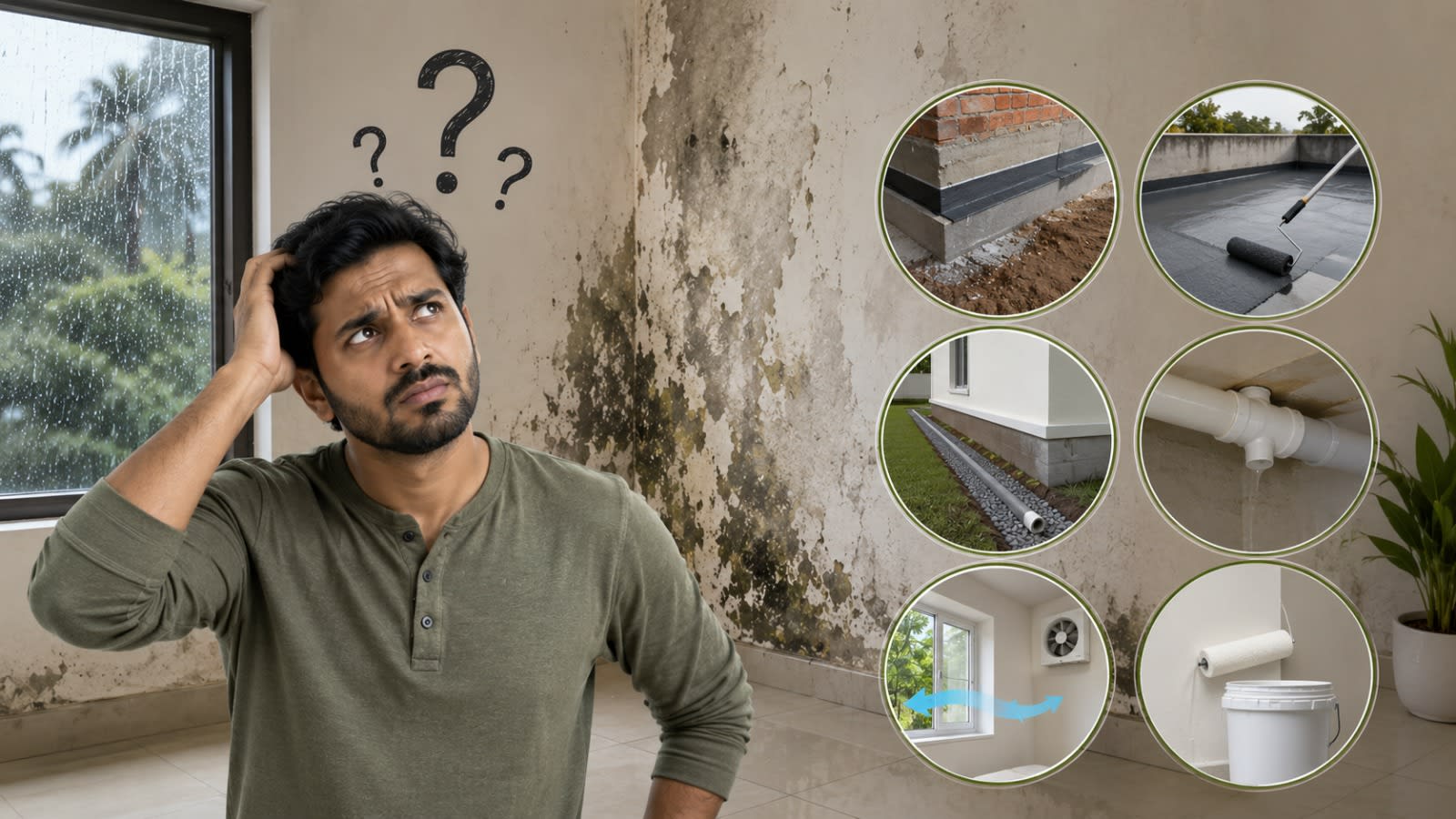
Dampness in Kerala Homes: Causes, and How to Prevent It During Construction
If you've lived in a house in Kerala for a few years, you've probably seen peeling paint near the floor, white powdery patches on walls, mould growth during the monsoon, or rooms that constantly smell damp. These are not isolated problems. They are symptoms of moisture entering the building.
Because of Kerala's heavy monsoon rainfall, high relative humidity, laterite soil, and prolonged groundwater saturation, dampness is one of the most common defects found in residential buildings. The encouraging part is that most dampness problems can be prevented through proper design and construction. Why Dampness Is Common in Kerala
A building remains durable only when moisture is kept outside its structural components. In Kerala, this becomes challenging because the ground remains wet for long periods, rainfall is intense, and humidity stays high for much of the year. If moisture protection is overlooked during construction, water gradually finds its way into walls, floors, and roof slabs.
The most common sources of dampness are:
Rising Damp
Rising damp occurs when groundwater moves upward through bricks, blocks, or masonry by capillary action. Masonry contains microscopic pores that act like tiny tubes, allowing water to travel vertically when there is no effective Damp Proof Course (DPC) between the foundation and the wall.
This type of dampness usually appears within the first 300 mm to 1200 mm above floor level and is recognised by peeling paint, damaged plaster, and persistent damp patches.
Salt Deposits (Efflorescence)
One of the most misunderstood signs of dampness is the white powder that appears on walls. This is called efflorescence.
As moisture travels through masonry, it dissolves naturally occurring salts present in bricks, blocks, sand, cement, mortar, groundwater, or laterite soil. When the moisture reaches the wall surface and evaporates, these salts remain behind as white crystalline deposits.
The problem is not only cosmetic. Certain salts are hygroscopic, meaning they absorb moisture from the surrounding air. Even after the visible water dries, these salts continue attracting moisture, causing recurring damp patches, blistering paint, plaster deterioration, and repeated maintenance.
Simply scraping the wall and repainting does not remove the salts trapped within the masonry. Unless the source of moisture is eliminated and the contaminated plaster is treated correctly, the problem usually returns.
Roof and Terrace Leakage
Flat roofs, terraces, balconies, and parapet walls are constantly exposed to rain. Poor waterproofing, cracks, inadequate slopes, or blocked rainwater outlets allow water to penetrate the roof slab and migrate into ceilings and walls.
Plumbing Leaks
Hidden water supply or drainage pipes inside walls and floors can leak slowly for months before becoming visible. By the time stains appear, significant damage may already have occurred within the wall.
Poor Site Drainage
Rainwater should always flow away from the building. If the surrounding ground slopes towards the house or water collects around the foundation, hydrostatic pressure increases and moisture finds easier paths into the building.
Inadequate Ventilation
Rooms with limited natural ventilation remain humid for long periods. Moisture condenses on cooler wall surfaces, encouraging mould growth and creating an unhealthy indoor environment.
Preventing Dampness During Construction
Preventing dampness is considerably easier and more economical than repairing it after the building is occupied.
The following measures significantly reduce the risk:
Install a properly designed and continuous Damp Proof Course (DPC) above plinth level to stop rising damp.
Use high-quality waterproofing systems for roofs, terraces, balconies, toilets, and other wet areas.
Ensure the site is graded so rainwater drains away from the building.
Provide adequate roof slopes, rainwater outlets, and drainage channels. Use well-cured masonry, good-quality mortar, and properly cured plaster to minimise water absorption.
Apply durable exterior finishes suitable for Kerala's climate. Design for effective cross ventilation to reduce indoor humidity and condensation.
Ensure waterproofing details around pipe penetrations, expansion joints, and parapet walls are properly executed.
Why Prevention Is Better Than Repair
Many homeowners believe dampness can be permanently solved by repainting or applying waterproof paint. Unfortunately, this addresses only the visible symptoms.
Once moisture has entered the masonry, dissolved salts have migrated through the wall, and plaster has begun to deteriorate, it becomes extremely difficult, and in many cases practically impossible, to restore the wall to its original condition without extensive repairs. Even after treatment, residual salts can continue attracting moisture, allowing damp patches to reappear over time if the original source of water is not completely eliminated.
For this reason, experienced architects and consulting engineers treat damp proofing, waterproofing, drainage, and ventilation as essential parts of the building design, not optional finishing items.
Conclusion
In Kerala's climate, dampness should be considered a design and construction issue rather than a maintenance issue. A properly installed Damp Proof Course, effective waterproofing, good drainage, appropriate material selection, and adequate ventilation can prevent most moisture-related problems before they occur.
The cost of incorporating these measures during construction is small compared to the repeated expense of repairing damaged plaster, repainting walls, replacing finishes, and treating recurring dampness after a home is occupied. When it comes to dampness, prevention is always more effective, more economical, and more durable than cure.